
Tamper-evident security tape: how to choose the right model for your shipments

Two companies buy the same tamper-evident security tape. The first sees its claims for missing contents decrease, while the second continues to receive them. The difference rarely lies in the product itself. It comes down to the model chosen and how it is applied.
Such tape does much more than seal a box. It is a sealing device designed to reveal any tampering: as soon as someone tries to peel it off, it leaves visible and irreversible evidence. However, you must choose the right width, length, type of residue, and backing. This guide compares the models offered at Secur-T based on their actual specifications.
Key points
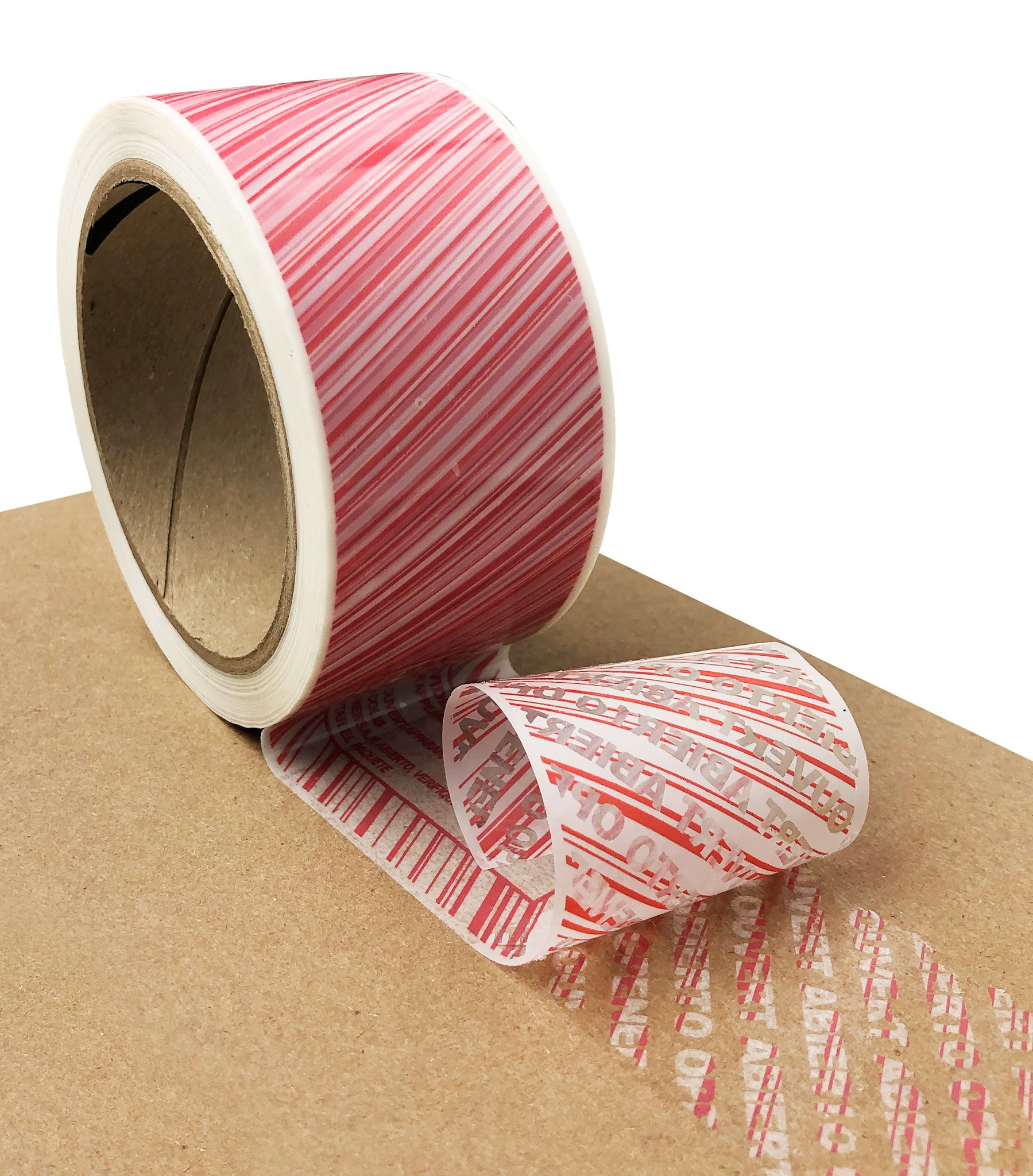
- The device reveals the message "OPENED / OUVERT / ABIERTO" at the slightest attempt at tampering, and this message cannot be hidden again.
- Each color has a role : red for high visibility, blue to identify a category of shipments, and red stripes on a light background for enhanced signaling.
- Length is chosen based on volume : 50 m for standard packaging, 100 m to reduce roll changes, and 1000 m for intensive, automated lines.
- The type of residue determines the rest : polyester leaves a permanent mark, while the KR seal leaves a clean, removable trace.
- For a container, this solution does not replace a high-security seal compliant with the ISO 17712 standard, which is required by customs programs such as Partners in Protection.
What tamper-evident technology actually does
Tamper-evident literally means "that makes tampering evident". The product is built in two layers. Any attempt at removal causes the top layer to delaminate, the security message remains printed on the surface of the package, and the peeled-off portion becomes unusable.
On the Tamperguard models offered by Secur-T, this label is trilingual: “OPENED / OUVERT / ABIERTO”. The benefit is both operational and a deterrent. At the receiving dock, an employee does not need to open the package or count the goods to detect an issue. A quick glance is all it takes, which speeds up integrity checks and allows for documenting the incident at the right time, before signing the delivery receipt.
On the KTC, the printing and numbering are placed under the adhesive, making the information impossible to alter or erase. Details matter when the number serves as a reference in a shipping log.
Tape or seal: choosing the right residue
The question comes up constantly, and it is resolved by looking at the surface being sealed.
The PTR, PTB, and PTRW models are designed for corrugated cardboard and standard packaging. Their high-strength PET film backing is 2 inches wide and offers consistent adhesion. They ensure closure, leave permanent evidence, and remain the default choice for shipping, storage, and distribution.
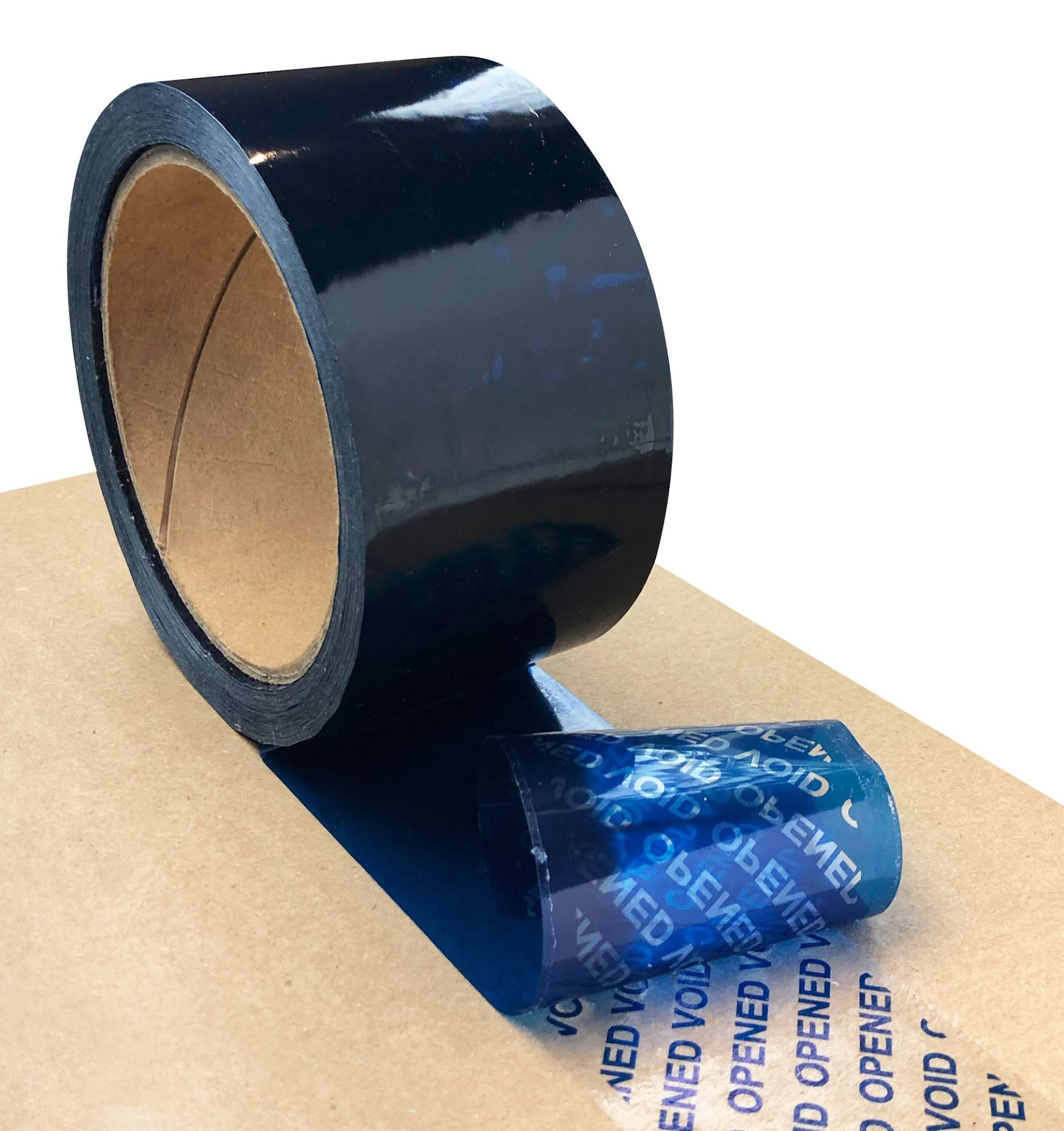
The KR meets a different need. This self-adhesive seal with partial transfer cancellation leaves a “VOID OPENED” mark that is easy to remove from the sealed surface if tampered with. Its matte Mylar polyester exterior is smooth and writable, which is convenient for handwritten notes. Its operating range is from -30 °C to +100 °C depending on the application, with an installation temperature of 0 °C to +80 °C.
For reusable bins or equipment cases, where permanent sticky residue would be unacceptable, the KR is the preferred choice. When the container is for single use, the standard tape does the job.
The KTC occupies an intermediate position. Its branding appears in translucent white when the tape is lifted, leaving no residue behind, which allows for easy replacement. It is available in two colors, red and blue, in a 50 m long by 5 cm wide format, with a 7.6 cm core, a standard-sized self-winding polypropylene backing, and high adhesion.
Which length for which volume
The three lengths offer the same level of protection. The choice comes down to productivity.
The 50 m (55 yard) format covers standard applications : 42 units per case, 60 cases per pallet, 12 x 8 x 15 in, 17 lbs.
The 100 m (110 yard) format reduces replacement frequency and improves productivity in the warehouse: 42 units per case, 36 cases per pallet, 15 x 10 x 15 in, 33 lbs.
The 1000 m (1094 yard) format is designed for high-volume, automated lines : 5 units per case, 96 cases per pallet, 10 x 10 x 8 in, 38.60 lbs.
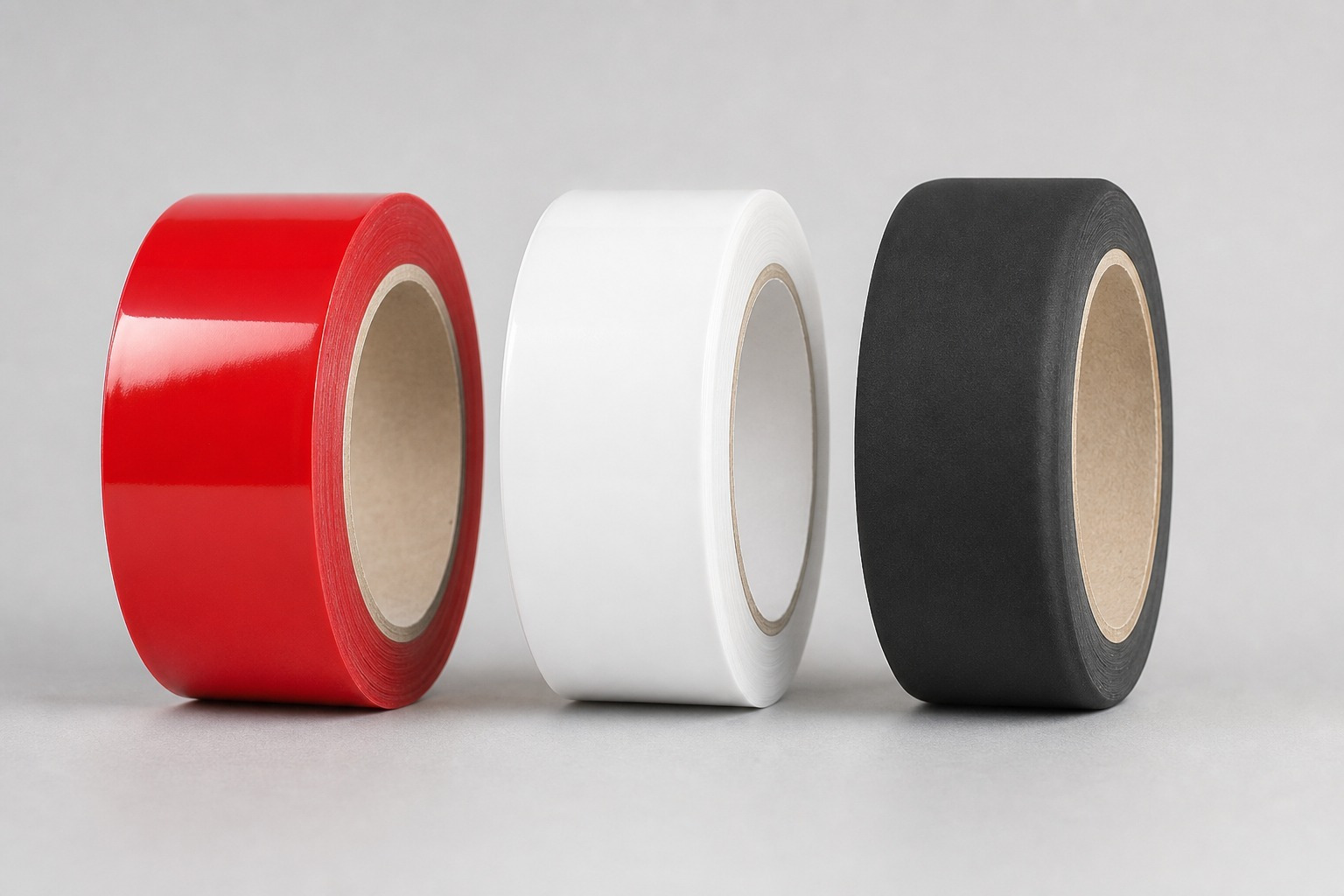
Each color is available in all three lengths : PTR50, PTR100, and PTR1000 in red; PTB50, PTB100, and PTB1000 in blue; PTRW50, PTRW100, and PTRW1000 in white with red stripes. The minimum order quantity is one case, and pricing is calculated by the case rather than by the unit.
Before to order a 1,000 m pallet, confirm two things with Secur-T. The maximum diameter allowed by your dispensers first, since a roll of this size only makes sense if your equipment can handle it, as well as the core size, which must match those same dispensers. Then, compare the price per meter. A 1,000 m case costs more upfront, but the cost per sealed carton drops and the number of line stoppages decreases. This is often where the return on investment is realized.
Color as a sorting tool
Red draws the eye to the sealing line. Blue allows for quick identification of a specific category in a mixed flow, such as high-value shipments. The striped version further enhances visibility, which is useful when multiple carriers handle the same load in succession.
A best practice is to vary the colors or printed graphics from one cycle to the next, while notifying your regular customers of the change. A fraudster who obtains your usual design loses their advantage as soon as it changes.
What this tape does not replace
The limitations should be clearly stated. Tape protects the integrity of a carton. It does not seal a shipping container or a trailer.
For the Partners in Protection program of the Canada Border Services Agency, a company must use only high-security seals that comply with ISO 17712 standards, maintain a log of seal numbers, apply these seals themselves, have a written policy and procedures for broken or non-compliant seals, and document an audit plan. The full requirements can be found in the PIP program standards and memorandum D23-1-1.
The two families work upstream and downstream of the container : on cartons, master boxes, stretch-wrapped pallets, returnable bins, and the transport of high-value items. They complement each other.
Three mistakes that void the protection
Applying the tape to a dirty, dusty, or damp surface. Adhesion drops and the void message may fail to transfer. A clean, dry surface is the basic requirement.
Choosing a residue type unsuited to the surface. A sticky residue on a reusable container becomes a constant annoyance for your customers, and that is exactly the use case for KR.
Failing to train your receiving team. Security tape signals a breach; it does not prevent it, and the evidence is useless if no one knows what to do next. Instructions must be written down: take a photo, note the number, record the discrepancy on the shipping document, and notify the manager before unpacking the parcel.
Customization and traceability
Beyond our standard catalog, Secur-T offers custom seal design, warehousing, consulting services, and a showroom. A custom model serves two purposes: making counterfeiting more difficult and integrating your own sequential numbering into your records.
For item-by-item traceability, security labels take over with their sequential numbering, barcodes, and ultra-destructible material that fragments upon removal. The full selection is available in the Tapes and labels category.
Frequently asked questions
Have your sealing method checked.
Most preventable losses result from an incorrectly fitted seal or imprecise application, rarely from a lack of materials. Our experts review your box sizes, volumes, and transfer points, then recommend the combination that best suits your needs. Speak to a Secur-T expert at 1-800-353-7557 or request a quote. You can also visit our sample room to test the models on your own packaging before purchasing.
Sign up for our newsletter
Do you know our advice even in your daily life?