Smart Cargo Seals: What Fleet Managers Need to Know
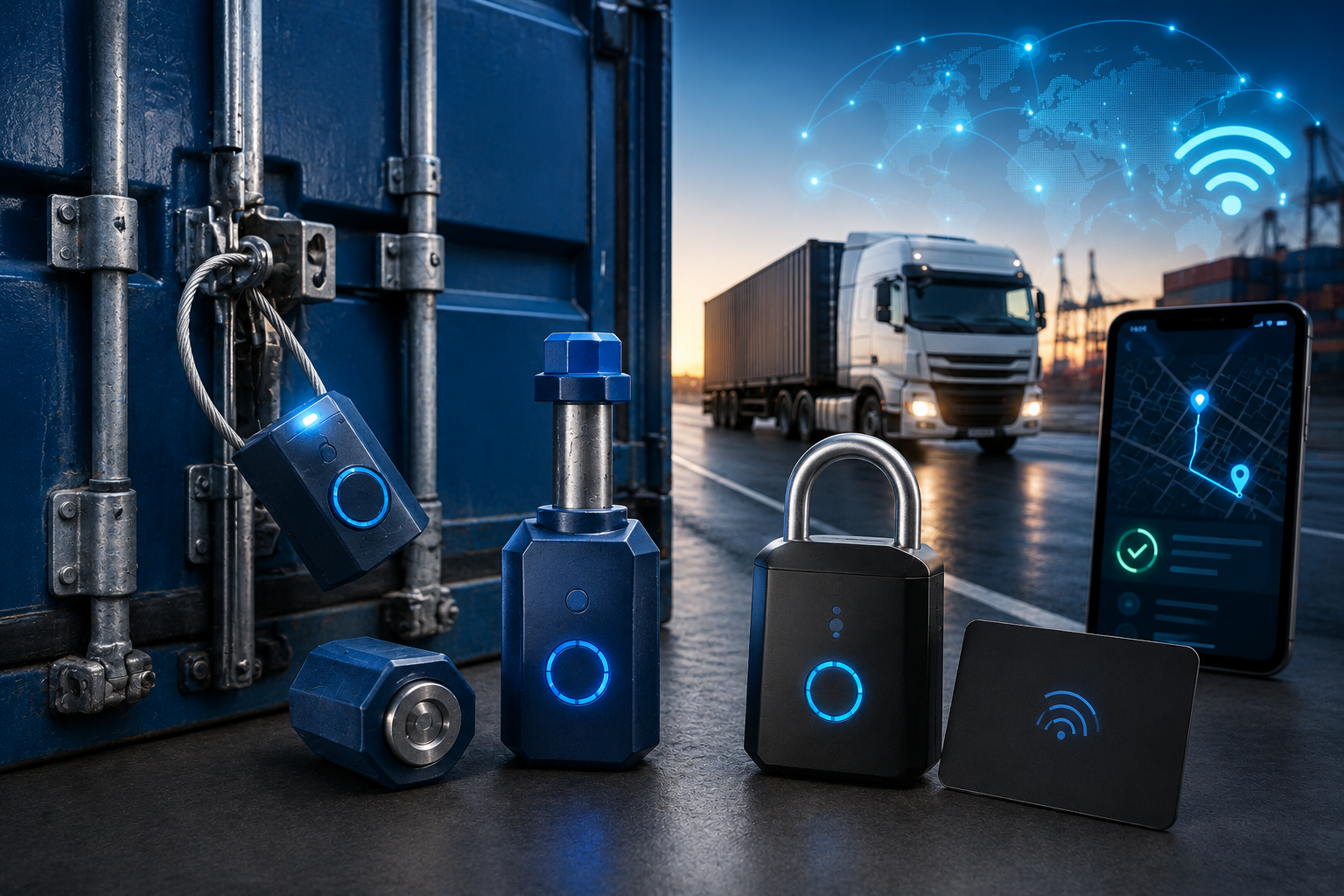

Are you managing shipments and wondering if a seal can do more than just reveal a breach after the fact? Now it can. Connected seals communicate the status of your cargo in real time, throughout the entire journey, and not just upon arrival. This article explains how these devices work and which one might be suitable for your operations.
Key Takeaways
- Connected seals transmit their status in real time (open, locked, tampered with) to a tracking system.
- The BLESecure uses Bluetooth and must be paired with a GPS tracker already in place.
- The Bolt integrates its own GPS and cellular connectivity, with no external device required.
- Both devices comply with the ISO 17712:2013, required for high-security seals in Canada.
- There is no single best solution : the right choice depends on the tracking infrastructure you already have in place.
What exactly is a connected seal?
A connected seal maintains the appearance of a traditional seal, cable, or bolt, but adds a layer of digital communication. The seal actively transmits its status throughout the journey, instead of being limited to a visual inspection at the destination.
In Canada, the Canada Border Services Agency requires that seals used by participants in the Partners in Protection program comply with the current ISO/PAS 17712 standard. TydenBrooks' BLESecure and Bolt meet this standard, in addition to adding digital monitoring.
What is the difference between the two technologies?
The BLESecure communicates via Bluetooth (BLE 5.0) with a GPS tracker already installed on the trailer or container. It reports three states: open, locked, and tampered, with visual and audible confirmation upon closure. Its battery lasts from several weeks to several months, and its casing is water and dust resistant (IP65).
The Bolt requires no external device. Its own GPS and cellular connectivity (4G LTE and 2G) are integrated directly into the seal. Activation is done by breaking the security cap, which automatically starts tracking. It also reports movements, stops, and sudden manipulations, and lasts up to 20 days of continuous use as per transport conditions.
When should you consider each option?
Common mistakes to avoid
- Choosing a seal connected without checking compatibility with your existing tracking system.
- Neglecting battery life compared to the actual duration of your trips.
- Forgetting to train teams on visual and audible confirmation when closing.
- Not documenting seal numbers, a common requirement for border security programs.
What to do next
If you already have a Bluetooth-compatible GPS tracker, the BLESecure easily integrates into your current process. If you're starting from scratch, or if you want to simplify your equipment, the Bolt combines security and location in a single device. Basic tracking may suffice for short, low-risk trips. For high-value cargo or international trips, professional support is still recommended.
Best practices to adopt
Always document seal numbers, train your teams to recognize visual and audible signals, and opt for an ISO 17712 certified seal for all cross-border shipments.
A simple decision to make with the right support
Choosing between a standalone connected seal and a system paired with an existing tracker becomes simple once you understand your current infrastructure. The key is to opt for a certified solution that is adapted to the reality of your routes, rather than one that seems the most technically advanced.
Need help choosing?
If you're unsure about the best solution for your situation, our team can help you understand your options and determine the next steps.
Contact us to learn more about the BLESecure or The Bolt
Frequently Asked Questions
Sign up for our newsletter
Do you know our advice even in your daily life?