Plastic seals: which model to choose based on what you are sealing

Alexandre Nadeau-Piuze
Lorem ipsum dolor sit amet consectetur adipiscing eli mattis sit
A plastic seal is meant to provide proof, not to act as a lock. If it arrives intact and with the correct number, you know it hasn't been tampered with. If it is broken, replaced, or shows a different number, you will know before you even begin unloading. The key is to choose a model with the right length, strength, and markings for your specific needs, whether you are securing materials, packaging, or transport equipment. Here is how to choose from the plastic seals available at Secur-T.
5 key points
- A plastic seal is a tamper-evident device: it reveals that an opening has occurred, it does not prevent it.
- Fixed length for a consistent closure point; adjustable length for when the opening size varies from one use to the next.
- Break strength is the primary selection criterion: from 13 lbs (5.9 kg) for a food cart to over 100 lbs for heavy freight.
- Numbering, logos, barcodes: without traceability, a seal is useless. Laser or hot-stamped marking is available on most models.
- For containers or trailers crossing the border under the PIP program, the ISO 17712 standard for high-security seals applies, and plastic is no longer sufficient.
Fixed or adjustable length
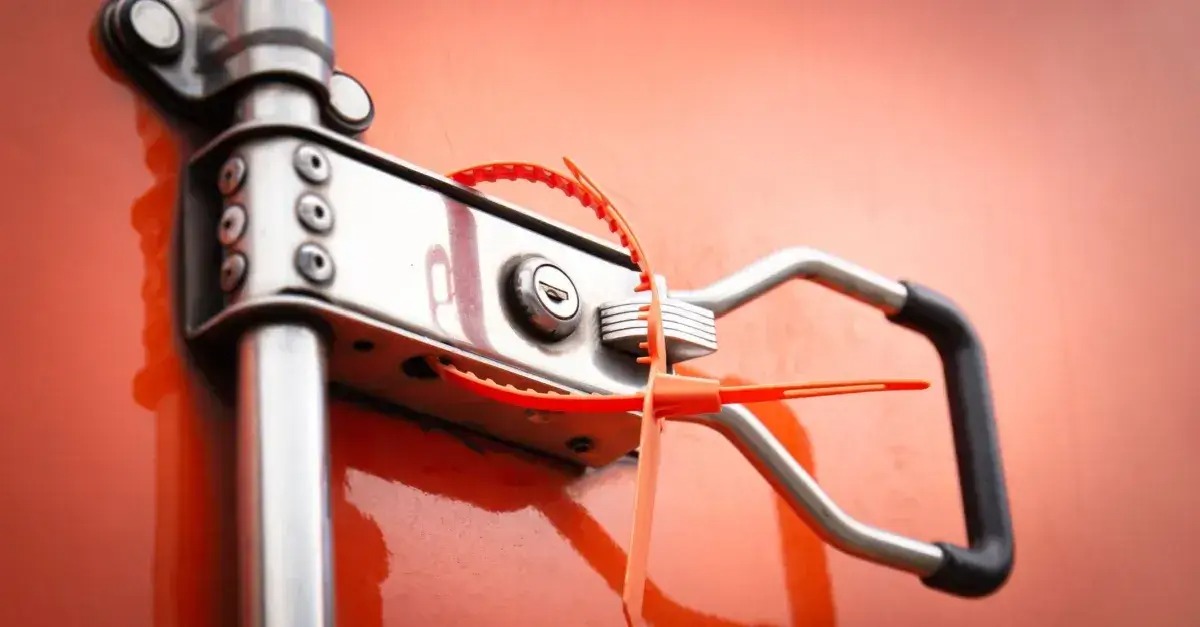
A fixed-length seal is always applied the same way, at the same closure point. The PTS 308, designed for trailer doors and swap bodies, is a classic example, featuring a patented design, a polypropylene body and strap, a double-locking mechanism, and a tamper-evident indicator. The Gemini Tote follows the same logic for transport bins, with a useful twist. Since a bin requires two seals, it is manufactured in twin sets with identical numbers. The UniFreight is available in a TS version with a break-away hole for easy removal, and an HD version with a reinforced collar exceeding 100 lbs of strength.
An adjustable adjustable tightens to the desired length. It is the choice when the same team seals valves, hatches, bins, and doors in the same day. The Pull-Tite II is the economical model in this family, featuring a self-locking seal that can be applied without tools. The Secure-Grip comes in three strap lengths (7, 11, and 15 in.) and features an integrated stainless steel locking clip. When lengths vary significantly, the Tug-Tight takes over and replaces older 9-inch two-way models. The Secur-Pull covers versatile applications.
Strength as a sorting criterion
This is where the Unipull range becomes useful, as it is graded.
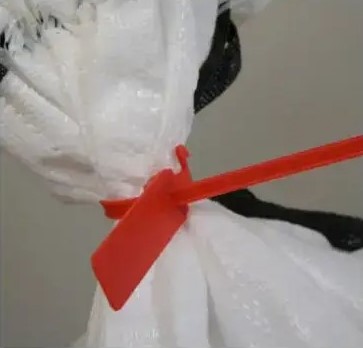
The Unipull LD (20 and 25 cm) and the Unipull MD (20 cm) hold from 5.9 to 8.2 kg, which covers catering carts, hospital kits, cabinets, dispenser cassettes, and bins. The Unipull HD has a 50 lb break strength and comes in four lengths (9, 12, 15, and 18 in.) for trailer doors, tankers, and railcars. The UniStrap is rated for 90 lb and comes in 13, 17, and 20 in. lengths. It is made of polypropylene with an ultrasonically welded metal insert, and its gripping spikes improve hold on bulk tankers, bins, valves, hatches, drums, bags, and packaging.
The material follows the same logic. High-density polyethylene for the Unipull, reliable both indoors and outdoors on small openings exposed to the elements. High-strength polypropylene for the UniFreight, featuring a tamper-evident acetal locking chamber and resistance to extreme temperatures.
How the tightening works
Two mechanisms cover almost all plastic seals. The pull-tight works with a serrated stem : the stem is inserted into the locking chamber, each notch prevents it from backing out, and the seal is adjusted to the opening without tools. The fixed-length seal works differently. The strap enters a double-chamber mechanism once and cannot be removed without breaking the seal body.
This mechanism determines the tensile strength rating. A pull-tight polyethylene seal tops out around 8 kg, while a one-piece polypropylene body with an acetal chamber exceeds 100 lb. The removal method also matters, whether it is a tear-off tab, a break point in the strap, or requiring bolt cutters.
Plastic, metal, or lead wire seals
Three families still coexist in warehouses. The lead wire seal, applied with lead seal pliers, remains a standard for counting and lockout/tagout. Metal seals, bolt seals or cable seals, are used when a barrier is required rather than just evidence of tampering, and this is the category mandated for shipping containers at the border. The plastic seal covers the entire middle ground: packaging, bins, valves, carts, and trailer doors in domestic circuits, featuring barcodes and numbering for traceability.
In terms of price, the difference is clear. A numbered plastic seal costs a fraction of a bolt seal, which explains why they are used by the thousands where proof of opening is sufficient. Minimum order quantity and marking are the two variables that drive the unit price.

Traceability and customization
A number recorded at departure, verified upon arrival. That is the entire mechanism. Most models accept a company name, logo, consecutive numbering, and barcodes, using hot stamping or laser marking. The Tug-Tight offers seven-digit numbering and three lines of eight characters. The Gemini Tote goes further with its dual numbering. Secur-T also offers customization and seal warehousing as distinct services, which simultaneously resolves the issue of inventory control.
A minimum quantity applies depending on the product, generally 200, 500, or 1,000 units, and the desired quantity must be specified when requesting a quote.
Colors and identification
Colors are used for the visual identification of a batch, department, or destination. The PTS 308 is available in blue, yellow, red, and green. The Unipull range covers green, navy blue, orange, red, white, and yellow; the UniFreight adds gray and white, and the UniTite Bio offers up to seven colors. Color-coding by department saves many unnecessary checks at the loading dock.
The Pull-Tite II is also Underwriters Laboratories approved for use on fire extinguishers, which matters if your fire safety equipment must be sealed and periodically inspected. For cabinets, storage areas, and industrial equipment lockout, the plastic seals is the related category to check out.
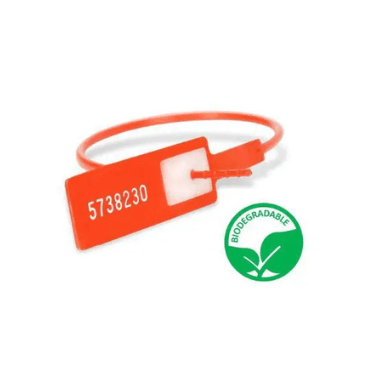
The biodegradable case
The UniTite Bio models are based on the UniTite 411, 413, and 414, featuring the BioSphere additive. Studies cited by the manufacturer indicate biodegradation up to 200 times faster than conventional plastics, with complete decomposition—meaning no microplastics—and no loss of strength during normal use. Degradation only begins upon contact with the microbial environment of a landfill. Usable lengths range from 290 to 490 mm, suitable for applications such as ballot boxes, mail, fuel and inspection hatches, or secure logistics. For an organization that uses tens of thousands of seals per year, the environmental impact is significant.
When plastic isn't enough
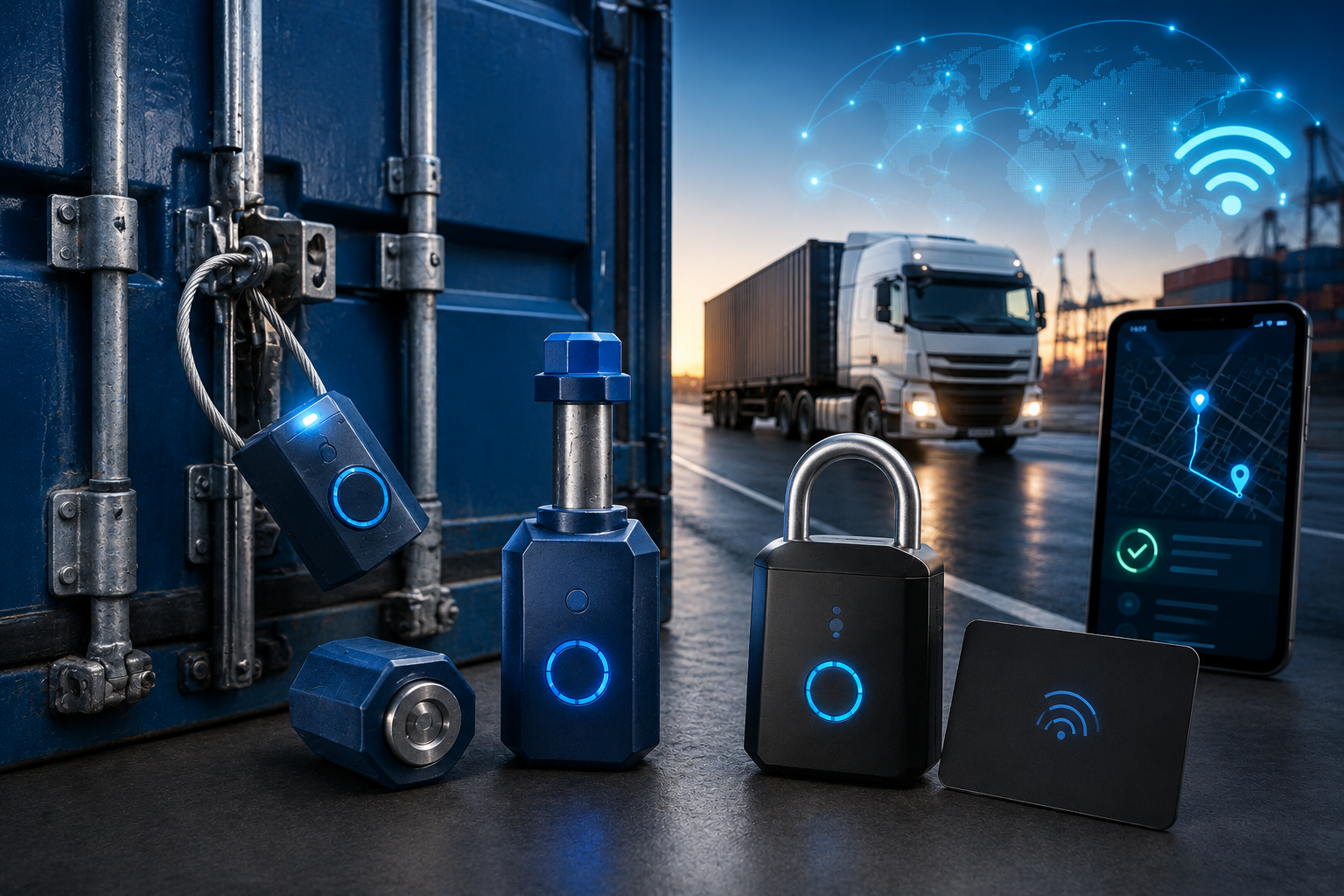
The ISO 17712 standard classifies mechanical seals into three categories: indicative, security, and high security. An indicative seal can be broken by hand or with simple pliers. A high-security seal is made of metal or wire cable and is designed to delay intrusion. The decision rule is simple: use indicative seals for evidence of tampering, and physical barriers to slow someone down.
The consequences are tangible in Canada. The Memorandum D23-1-1 from the Canada Border Services Agency requires participants in the Partners in Protection program to use high-security seals that meet or exceed the ISO 17712 standard on all containers and trailers crossing the border. These must be applied by trained personnel, with the manufacturer's test report kept on file. The sealing procedures recommended by U.S. Customs follow the same logic. Plastic remains the choice for internal use, such as bins, valves, carts, and domestic freight, while bolt or cable seals take over at the border.
FAQ
Take action
Tell us what you are sealing and how often. A Secur-T expert we offer the right model, length, and marking, with the applicable minimum quantity.
Sign up for our newsletter
Do you know our advice even in your daily life?